Run of Show, field report
Inside a 45 Minute Ceremony to Reception Room Flip
Forty five minutes, one room, two events. What the flip crew actually does while guests are at cocktail hour, who is responsible for which piece, and the two checks that keep the doors from opening late.
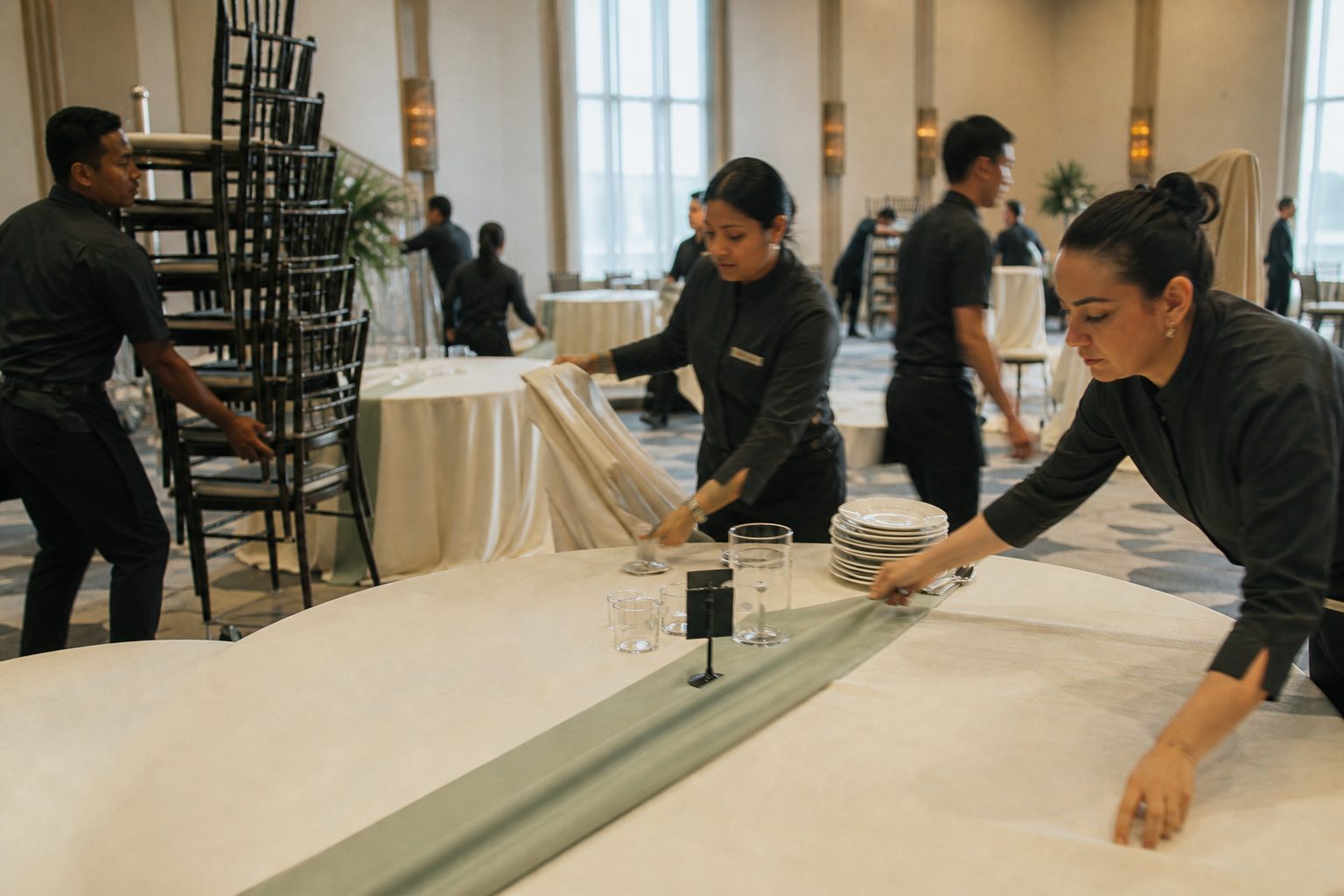
The Room Before: Chairs, Aisle, and Staged Reception Tables
Most ceremony to reception flips happen in rooms set up for efficiency, not beauty. You walk in that morning to two-thirds of the reception tables already draped and set. These are pushed to the outer edges, behind pipe and drape, or grouped in the far corners. The ceremony aisle slices down the center, lined with rows of chairs that will need to disappear or relocate as soon as vows are over.
The couple's vision usually calls for a floral arch, a handful of statement arrangements, and a clean aisle. Florists set up early, then vanish until the flip. The DJ or band tucks gear against a wall. Catering staff arranges plates and glasses on any tables that will not be moved. Every item in the room is there for a reason, and every item means one more thing to move, reset, or protect when time is tight.
Staging is all about compromise. Rental companies hate to double handle heavy tables. The venue manager wants a clear path to exits. Your job as planner is to predict the choke points. If you have 120 guests, that means about 120 chairs, most of which have no place to stay once dinner begins. Before the ceremony, take photos of each setup. Mark which tables are "live" and which chairs will need to be stacked or rolled out.
Keep reading: How to Build a Wedding Day Timeline Backward From Sunset
Minute Zero: Moving Guests to Cocktail Hour and Holding Them There
The moment the ceremony ends, the flip clock starts. Ushers, venue staff, or your team need to guide guests out quickly and smoothly. The officiant can help by making a cheerful announcement: "Please join us for cocktails while the room is transformed." Signs and stanchions block re-entry.
Keeping guests out takes more work than getting them out. The bar must be ready, hors d'oeuvres hot, and music playing. Coat check or restroom access should not require anyone to walk through the main room. Every minute a guest lingers in the doorway eats into flip time, so your staff should gently but firmly redirect anyone who tries to peek in. Assign someone to stand by the entrance with a smile and a clipboard. That person is the last line of defense.
Who Does What: Venue Staff, Rentals, Florals, Your Team
Venue Staff
Venue staff handle all things the venue owns: tables, house chairs, trash, and sometimes tablecloths. Their crew knows which walls are moveable, how to reset lighting, and where the breaker box is. They also know the quirks of their own floor plan: which doors stick, which elevators are slow. When problems happen during the flip, it is usually a venue staffer who has the authority to fix them fast.
Rentals
Rental companies are responsible for their own items and nothing else. Their labor may not be included in the basic delivery. If specialty chairs or farm tables were brought in for the ceremony, only the rental crew will move those, unless you have a clear agreement. Most rental contracts limit liability if someone else moves their gear, so clarify this at your final walkthrough.
Florals
Florists usually set up early, leave, and return just for the flip. They bring moving carts and extra hands for heavy installations. Ceremony arrangements often get repurposed as centerpieces or on the escort card table. The florist's timeline is tight: they may have another event to reach, so build in buffer time for anything that must be moved or rebuilt.
Your Team
Your crew is the glue. You fill the gaps, troubleshoot, and direct traffic. Assign at least one person to each vendor category. Someone oversees chairs, someone manages florals, someone checks that table settings are complete. The lead planner or coordinator is the timekeeper, calling out ten, five, and one-minute marks. Walkie-talkies or group texts are essential. Take notes on what slows you down: that is your leverage for the next event.
Keep reading: Day Of Coordination vs Wedding Management: Where Scope Ends
The Chair Math and Where the Extra Chairs Go
Chair management is the single biggest labor item during a flip. For most ceremonies, every guest needs a seat, but dinner layouts may require only eight to ten chairs per table. That leaves anywhere from thirty to seventy chairs without a home, depending on guest count and table size.
There are three basic strategies. First, stack and remove: designate a hallway, storage room, or tent where extra chairs can go. This demands muscle and a clear path. Second, repurpose: some or all ceremony chairs become dining chairs, but only if styles match and the setup allows. Third, relocate: shift unused chairs to the perimeter as "backup" seating or along walls, but this can look messy in photos. Each approach has tradeoffs in labor, speed, and aesthetics.
Plan your chair move in advance and walk the route. Glassware or candles left behind can turn a fast stack into an accident. If using outdoor storage, check the weather. Wet grass and wood chairs do not mix. If you have to double-handle, moving chairs out, then back in for another event, factor that into your staffing needs and timeline.
Florals That Move: Ceremony Pieces as Centerpieces
Designers often create large arrangements for the ceremony with the plan to reuse them. Pedestal florals at the altar become focal points near the dance floor or on the head table. Aisle markers can turn into small centerpieces or be clustered at the bar. This reuse saves money and makes the most of the floral budget, but it relies on fast hands and clear instructions.
Before the day, specify which pieces go where. Label vases and stands with colored tape or tags. Assign one team member to communicate with the florist, ensuring nothing is left behind or misplaced. Some installations need to be disassembled to fit on dinner tables. Bring extra clippers, towels, and buckets for water.
Candle arrangements are trickier. If moved while still lit, wax can spill, and glass can crack. Assign two people to extinguish and relight as needed. Confirm with the venue if open flames are allowed in all areas. Fake candles can be moved more easily, but check battery levels the morning of the event.
See how AisleTimeline handles this for weddings and events
Sound, Lighting, and Band Setup Running in Parallel
Audio and lighting teams work a different timeline. Ceremony sound is usually minimal: a mic for the officiant, background music, and perhaps a small speaker. For the reception, the DJ or band needs more power, more cabling, and often a stage. That gear may already be in the room, hidden or unplugged, or it may have to be loaded in during the flip.
Staging can be a bottleneck. If the band needs to soundcheck, coordinate with catering to avoid glassware and plate setup in the same area. Lighting teams may need to re-aim spotlights or switch from warm ceremony tones to a party look. Walk through the lighting cues before guests arrive. If moving uplights or pin spots, have extension cords and gaff tape ready. One tripped breaker can delay everything.
Some venues allow a full soundcheck earlier in the day, but others do not. In tight flips, the audio team may be plugging in while florals are being set, so communication is key. Use colored tape on the floor to mark where speakers, tables, and dance floor edges go.
The Two Checks Before Doors Open
First Check: Safety and Cleanliness
Before anyone opens the doors to guests, the first check is for safety and cleanliness. This means no cables across walkways, no glassware precariously stacked, and nothing blocking emergency exits. Venue staff usually handle trash and spill cleanup, but you should walk the room yourself. Look for dropped napkins, stray chair covers, or empty floral buckets. Sweep and reset as needed.
Second Check: Design and Details
The second check is all about the couple's vision. Are place cards in the correct order? Are chairs uniformly spaced? Are candles lit, napkins folded, and table numbers visible? If there is a family table or a reserved section, confirm those details match the seating chart. Take a photo from the main entrance: does the room look finished? If not, fix it before letting anyone in.
Assign one team member to double check every detail against the floor plan and timeline. The final "all clear" should come from the lead coordinator, not a venue manager or outside vendor. Only then should the doors open to guests.
Why Flips Run Long and How to Buy Back Ten Minutes
Flips run long for a handful of predictable reasons. Guests dawdle, especially if the bar setup is slow or the cocktail hour area is far from the main room. Chairs take longer to stack than anyone plans, especially with mismatched sizes or if glassware has to be cleared first. Vendors bump into each other, florists waiting on catering, rentals blocked by sound crew, and so on.
Weather can throw the whole plan off. Rain slows down outdoor storage and creates tracking hazards on the floor. Power issues or blown circuits delay lighting and music. Any one of these can eat up five to ten minutes without warning.
To buy back time, stack your labor early. Bring extra hands for chair moving and florals. Stage all items as close as possible without blocking walkways. Use detailed labels on everything that moves. Run a pre-flip huddle with all vendors, walking through the order of operations minute by minute. Give vendors a way to signal when their part is done, so no one waits for a task that is already finished.
For the timeline, use a tool that lets vendors see only what matters to them and notifies everyone of changes immediately. A shared, real-time run sheet helps close the communication gaps that cause delays, making the ceremony to reception flip more predictable for everyone involved.
Read also

How to Build a Wedding Day Timeline Backward From Sunset
Sunset fixes the one time on the day you cannot move, so the schedule gets built in reverse from it. Here is the order to place portraits, the ceremony, travel, and getting ready, and where the buffers belong.

Day Of Coordination vs Wedding Management: Where Scope Ends
Three service tiers, three very different workloads. What each package covers, when the handoff starts, who holds the vendor contracts, and the contract language that keeps a coordination job from becoming full planning.

COIs, Permits, and Liquor Liability: The Paperwork Venues Require
Venues ask for a certificate of insurance, an additional insured endorsement, and sometimes a permit. What each document proves, who issues it, and the deadlines that decide whether a vendor gets through the gate.